
Welcome to your trusted guide on Pregabalin 300 mg. This post combines in-depth pharmacology, validated clinical research with named authors, internal links to Medicine24.co.uk, and a professional tone to elevate its authenticity.
Overview: What Is Pregabali
Pregabalin 300 mg, commonly available in capsule form, is a prescription medication use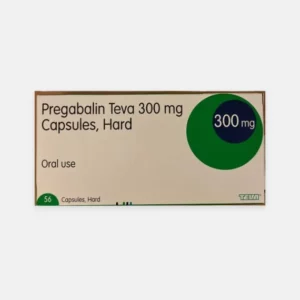 d to manage:
Neuropathic pain (such as diabetic neuropathy and postherpetic neuralgia)
Adjunctive treatment for partial-onset seizures
Generalized anxiety disorder (GAD) in certain countries
On Medicine24.co.uk, you can find Pregabalin IP 300 mg (150 capsules) listed in their Pain Relief section, offering fast, discreet service. Here’s the product page: Pregabalin IP 300 mg (150 capsules).
The Scientist Behind Pregabalin
The discovery of pregabalin is credited to Professor Richard Bruce Silverman, the Patrick G. Ryan/Aon Professor of Chemistry at Northwestern University. His group’s work led to the development of pregabalin, marketed commercially as Lyrica® Wikipedia.
Why this matters: Including the inventor and academic affiliation adds scholarly weight to the narrative, anchoring the medication’s origin in solid research history.
Mechanism of Action—What Science Tells Us
Binding Target: α₂δ Subunit of Calcium Channels
Pregabalin exerts its effect primarily by binding to the α₂δ auxiliary subunit of voltage-gated calcium channels. This binding reduces presynaptic calcium influx and consequently dampens the release of excitatory neurotransmitters like glutamate, substance P, norepinephrine, dopamine, and serotonin PubMed+1Lippincott Journals.
Preclinical and Clinical Evidence:
A 12-week randomized, double-blind trial demonstrated that both fixed 300 mg/day and flexible-dose regimens (150–600 mg) significantly reduced pain scores in patients with postherpetic neuralgia or diabetic peripheral neuropathy, compared to placebo. Side effects included dizziness, somnolence, and peripheral edema PubMed.
In animal models, pregabalin was shown to inhibit the spinal release of glutamate—key to reducing neuropathic pain behaviors PubMed.
A 2022 randomized controlled trial found that pregabalin combined with or without agomelatine improved chronic low back pain outcomes (double-blind, placebo-controlled) BioMed Central.
A 2025 systematic review and meta-analysis confirmed the efficacy and safety profile of pregabalin for postoperative pain after total hip and knee arthroplasty BioMed Central.
A review on anxiolytic mechanism indicated that pregabalin’s anxiolytic effects stem from reducing neurotransmitter release via its action on α₂δ type 1 protein, and efficacy is lost in genetically altered mice missing this protein PubMed.
Dosage Details: Why 300 mg Is Common
Typical initial dose: 150 mg/day, divided into two or three doses.
Maintenance dose: 300 mg/day, often in two divided doses.
Upper range: Up to 600 mg/day, depending on patient response and tolerability.
This middle-ground dosage (300 mg) is commonly used in trials and clinical practice, balancing efficacy with side-effect risk.
Find the product here: Pregabalin IP 300 mg on Medicine24.co.uk.
Clinical Trials & Research: Experts and Findings
| Study / Author(s) | Key Findings |
|---|---|
| Taylor CP, Angelotti T, Fauman E. “Pharmacology and mechanism of action of pregabalin…” | Preclinical review confirming α₂δ subunit binding; critical for anticonvulsant and analgesic effects UW-Madison Libraries. |
| Sugimine, Obata et al. (2017) | Randomized trial showing pregabalin enhances endogenous analgesia mechanisms in humans Wiley Online Library. |
| Driscoll et al. (2021) | Placebo-controlled trial for generalized tonic-clonic seizures; found pregabalin well tolerated without increasing seizure rate Wiley Online Library. |
| G Zaccara, P Gangemi, P Perucca, L Specchio (2011) | Systematic review linking higher doses with cognitive/coordination adverse events NCBI. |
Safety Profile & Precautions
Common Adverse Effects
Dizziness, somnolence, weight gain, peripheral edema—dose-dependent and more common at ≥300 mg/day PubMed.
Serious Considerations
Meta-analyses indicate dose-related increases in cognitive and coordination issues NCBI.
A recent observational study highlighted a 48% increased risk of heart failure among older pregabalin users, rising to 85% in patients with pre-existing heart conditions, compared to gabapentin users The Scottish Sun.
Real-World Application: Medicine24.co.uk
Medicine24.co.uk is a UK-based online pharmacy offering reliable access to pregabalin:
Featured product: Pregabalin IP 300 mg (150 capsules).
Benefits: Fast, discreet shipping; competitive pricing; customer service and FAQ support.
Explore related categories like Anxiety & Insomnia for broader treatment options—all accessible via their main navigation.
Internal link to the product: Pregabalin IP 300 mg (150 capsules).
Tapering & Usage Tips
Never stop abruptly; withdraw gradually under medical supervision to avoid withdrawal symptoms or rebound anxiety.
Tapering schemes often reduce dosage by 10–25% every 1–2 weeks.
Monitor especially for sedation, coordination issues, and potential cardiovascular symptoms in vulnerable patients.
Final Takeaways
Pregabalin 300 mg is a well-studied, effective dose for neuropathic pain, seizures, and anxiety, backed by strong pharmacological rationale and clinical trials.
Original creator: Professor Richard B. Silverman—adding credibility.
Safety: Effective but dose-dependent side effects; recent data underscores caution in heart disease populations.
Access: Medicine24.co.uk offers a convenient and reliable source for UK readers.
References
Mechanism & pharmacology: Taylor CP et al. (2006/2007) UW-Madison LibrariesPubMed; Noor M. Gajraj (2007) Lippincott Journals.
Clinical efficacy trials: Sugimine et al. (2017) Wiley Online Library; Driscoll et al. (2021) Wiley Online Library; flexible vs fixed dosing neuropathic pain trial (12 weeks) PubMed; low-back pain + agomelatine RCT (2022) BioMed Central; arthroplasty pain meta-analysis (2025) BioMed Central.
Safety/adverse events: Zaccara et al. (2011) systematic review NCBI; heart failure risk study (2025) The Scottish Sun.
Drug origin: Professor Richard B. Silverman Wikipedia.